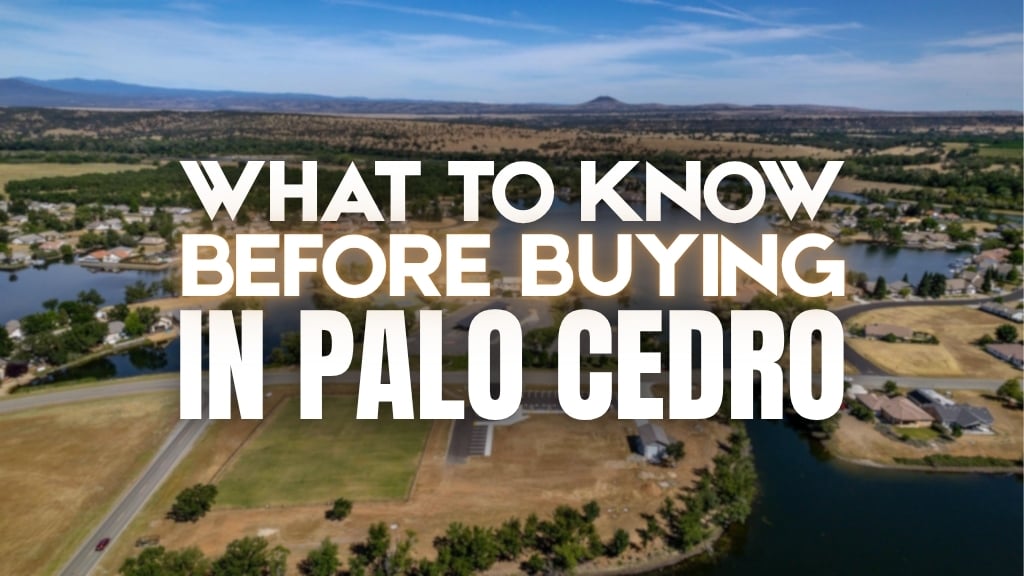
There's a moment in almost every home search when the practical checklist disappears for a minute. You walk through the front door, notice the mountain view, picture coffee on the porch, start mentally placing furniture, and suddenly you're already living there.
In Shasta County, that is exactly when you need to ask one decidedly less exciting question: "What will it actually cost to insure this house?"
For buyers looking in Redding, Palo Cedro, Anderson, or rural Shasta County, homeowners insurance can vary enough from one property to another that it deserves a place near the beginning of the buying decision.
California's insurance market is showing signs of improvement in 2026, but availability remains especially important in wildfire-exposed communities. The California Department of Insurance even offers a Home Insurance Finder that allows consumers to specifically search for companies and agents that may write coverage in higher-fire-risk areas.
The goal is not to scare anyone away from rural living. It is to avoid falling in love with a home, building your budget around the mortgage payment, and discovering late in escrow that the insurance picture changes everything.
Before You Price the Kitchen Remodel, Price the Insurance
Most buyers naturally compare houses by purchase price. A $525,000 home feels comparable to another $525,000 home, especially when the mortgage numbers look similar. But the real monthly cost of owning those two properties may be very different once insurance enters the picture.
The California Department of Insurance warns that wildfire-related surcharges used by insurers can vary significantly depending on a home's wildfire vulnerability. Its consumer comparison tool is useful for general shopping, but CDI specifically notes that buyers need a property-specific quote from an insurer, agent, or broker to know the actual premium and whether the home is eligible for coverage.
Start Asking Insurance Questions Once a Property Gets Serious
You do not need to collect full insurance quotes for every house you casually scroll past at night. Once a property becomes a genuine contender, though, move insurance much higher on the checklist.
Gather the basic information an insurance professional may need: the property address, construction type, approximate age, square footage, roof type and age, major renovations, heating systems, outbuildings, and any wildfire mitigation features you can document. Then request estimates early enough that the answer can still influence your decision.
Why Two Similar Shasta County Homes Can Be Very Different Insurance Stories
Insurance companies are not simply looking at the price on the purchase contract. The Department of Insurance explains that companies evaluate property-specific risk, and insurers may assign wildfire risk scores to homes.
California regulations also require insurers to recognize qualifying wildfire-safety actions through discounts. That helps explain why houses with similar list prices can produce very different quotes.
The Roof May Matter More Than the Countertops
A gorgeous remodeled kitchen might help sell a house, but an insurer may be far more interested in the roof. California's Safer from Wildfires framework recognizes features such as a Class A fire-rated roof, ember-resistant vents, dual-pane windows or shutters, a five-foot ember-resistant zone around the home, cleared vegetation beneath decks, and other mitigation measures.
Qualifying actions can earn insurance discounts. So when comparing two properties, ask not only, "Which one has the nicer finishes?" Ask, "What has already been done to make this home more resilient?"
Vegetation and the Space Around the House Matter Too
On rural and semi-rural properties, what surrounds the structure can become part of the insurance conversation.
The state's wildfire framework emphasizes defensible space, vegetation management, and reducing combustible materials immediately around buildings. Insurers are required to offer discounts for qualifying mitigation actions under the state's wildfire-safety regulations.
A property with acreage and beautiful mature vegetation can still be a fantastic home. It simply means buyers should understand what maintenance, clearance, and mitigation may be part of responsible ownership.
Think in Terms of Rebuilding Cost, Not Just Purchase Price
Here's another insurance concept that catches buyers by surprise: the amount you pay for a home and the amount it would cost to rebuild that home are not necessarily the same.
The California Department of Insurance specifically warns consumers not to confuse purchase price with reconstruction cost. Land value is part of what you purchase, but homeowners coverage is concerned with replacing or rebuilding the insured structure after a covered loss.
That can matter in Shasta County where two homes of similar market value may have very different structures, materials, outbuildings, access conditions, or reconstruction needs. When getting a quote, make sure you understand the proposed dwelling-coverage limit and ask how the estimated rebuilding cost was determined.
What Happens When Standard Insurance Is Hard to Find?
This is where buyers sometimes hear the words California FAIR Plan and immediately assume the deal is doomed. It is better to understand what the FAIR Plan actually is.
The California FAIR Plan describes itself as the state's insurer of last resort, providing basic property insurance when coverage is not reasonably available through traditional insurers. Buyers generally work through a licensed broker, who first searches for coverage in the traditional market before using the FAIR Plan as an alternative.
FAIR Plan Coverage Is Not the Same as a Standard Homeowners Policy
This distinction is extremely important. A FAIR Plan dwelling policy provides basic named-peril protection, including coverage for fire, lightning, internal explosion, and smoke, with certain additional coverages available depending on the policy. It does not automatically provide everything buyers typically associate with a comprehensive homeowners policy.
That is why you may also hear about a Difference in Conditions, or DIC, policy. A DIC policy can supplement FAIR Plan coverage with protections the FAIR Plan does not provide, such as theft, liability, and certain water-damage coverage. The FAIR Plan itself does not sell DIC policies, so buyers should discuss the complete coverage structure with a licensed broker.
The question is not simply, "Can I get a FAIR Plan policy?" It is, "What combination of policies would I need, what does that coverage actually include, and what would the total annual cost be?"
Build Insurance Into the Monthly Payment Before You Decide What You Can Afford
This is where insurance stops being an abstract risk issue and becomes household math.
Suppose two properties require almost identical mortgage payments. If one carries a significantly different annual insurance cost, your real monthly ownership expenses are not identical at all.
Before deciding what feels comfortable, calculate the annual insurance premium into a monthly number alongside principal, interest, property taxes, HOA dues if applicable, utilities, and other predictable ownership expenses.
The Shasta County Insurance-First Buying Sequence
For a serious buyer, the process does not have to be complicated:
Identify the property you are genuinely considering.
Collect details about the home, including roof age and material, construction, square footage, upgrades, outbuildings, and wildfire mitigation features.
Request property-specific quotes early, ideally from more than one insurance source.
Ask whether standard comprehensive coverage is available.
Ask about wildfire mitigation discounts and what documentation is required.
If traditional coverage is difficult to obtain, discuss the FAIR Plan and supplemental DIC coverage with a licensed broker.
Compare coverage, not just premiums. A cheaper policy is not necessarily equivalent.
Convert the annual premium into a monthly ownership cost before deciding how comfortable the home's overall payment really feels.
Keep insurance verification active through escrow, especially if anything significant about the property or proposed coverage changes.
California's Department of Insurance recommends shopping and comparing residential insurance just as consumers would with other major purchases, and its tools can help buyers identify insurers, licensed professionals, and general premium comparisons.
Fall in Love With the House After You Know the Whole Number
A great Shasta County property may come with acreage, privacy, foothill views, room for animals, a detached shop, or the kind of quiet you simply cannot recreate in the middle of town. Insurance does not have to ruin that dream. It just needs to be part of the dream before you sign up for it.
The best outcome is not finding the cheapest insurance policy. It is knowing early what coverage is realistically available, what it protects, whether additional wildfire mitigation could help, and how the premium changes the true cost of owning the property.
Thinking about buying a home in Shasta County? Reach out to The Barrett Team before you get too far into the search. We can help you compare properties across Redding, Palo Cedro, Anderson, and surrounding communities, identify the questions worth asking early, and build insurance due diligence into the buying process so the house you love still makes sense when you see the full monthly picture.
FAQs
When should I get homeowners insurance quotes when buying in Shasta County?
Once a property becomes a serious contender, start requesting property-specific quotes so you understand coverage options, eligibility, and potential costs before moving forward.
Why can insurance costs differ between two similarly priced homes?
Insurance companies consider property-specific factors such as wildfire risk, construction features, mitigation measures, and the amount of coverage needed, not just the purchase price.
Can wildfire mitigation lower my homeowners insurance premium?
Potentially. California requires insurers to offer discounts for qualifying wildfire mitigation measures recognized under the Safer from Wildfires framework.
What is the California FAIR Plan?
The California FAIR Plan provides basic property insurance when traditional coverage is not reasonably available, making it an option buyers may need to consider in higher-risk areas.
Do I need additional insurance with a FAIR Plan policy?
Potentially, since FAIR Plan coverage is more limited than a standard homeowners policy and a Difference in Conditions policy may provide additional protections.
About The Barrett Team
The Barrett Team is one of Redding’s most trusted real estate teams, helping buyers and sellers throughout Redding, Anderson, Palo Cedro, Shasta Lake, and surrounding communities across Shasta County.
The team has earned more than 315 five-star Google reviews and 42 five-star Zillow reviews, has been recognized as a Top 5 FastExpert-ranked team in Redding, a Top 3% Best Real Estate Team in California by RealTrends, and ranks among the top 15% of real estate teams in the United States.